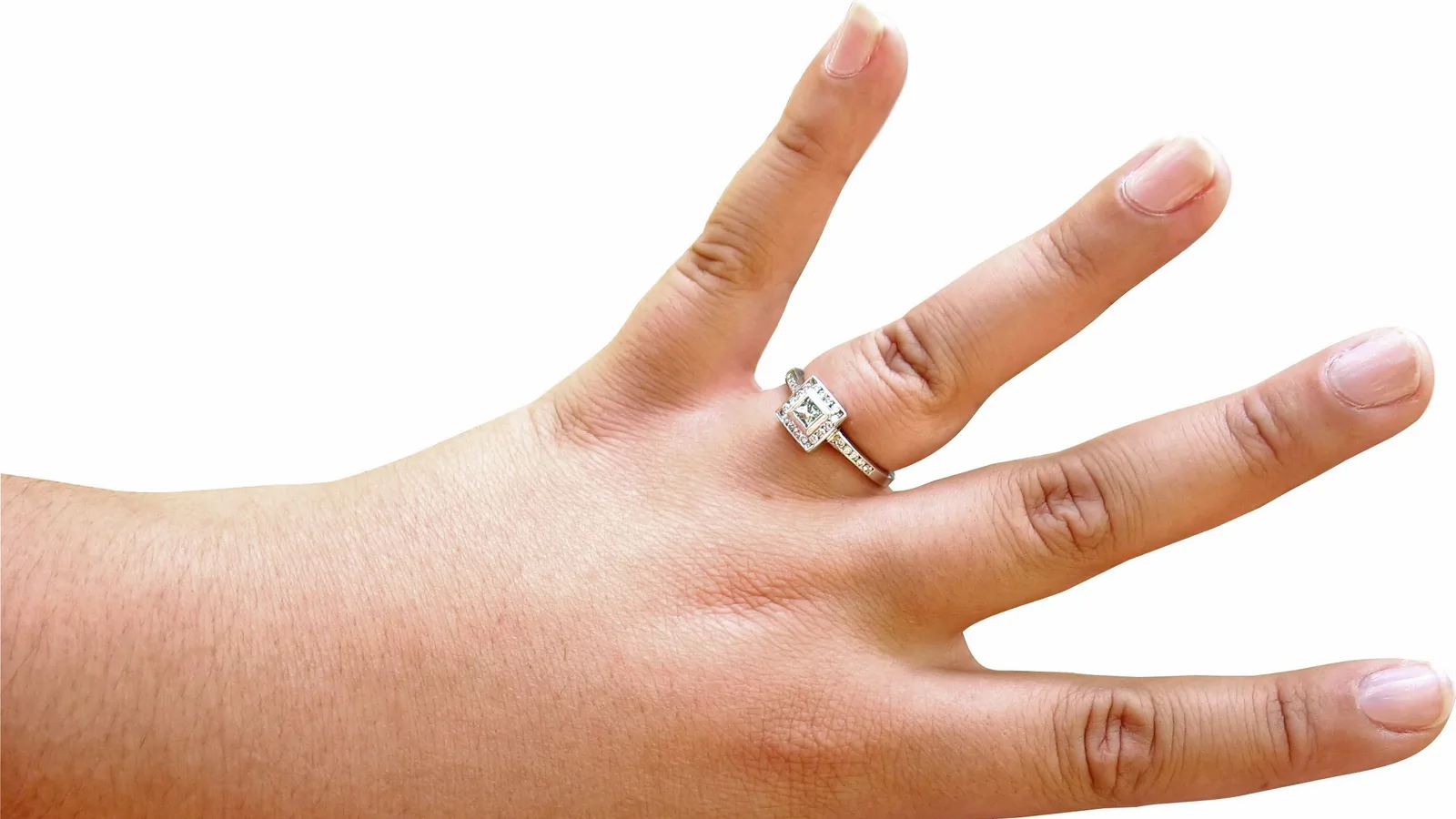
Platinum vs Silver 2026: Which Metal Suits You Best?
Platinum vs silver compared on colour, weight, durability, tarnish and cost — plus who each metal suits, from wedding rings to trend-led pieces.
Platinum vs silver: the short answer
Platinum wins this one, but not because silver is a lesser metal. It wins because platinum asks less of you over time. It is white all the way through, it doesn't tarnish, and when it scratches the metal is pushed aside rather than worn away — so the claws holding a stone stay put for far longer than they would in silver.
Silver fights back on everything else. It is brighter, lighter, considerably cheaper and available in a far wider spread of designs, from delicate layering chains to sculptural earrings. If your taste changes with the seasons, silver lets you follow it.
Below we compare the two on the points that actually decide a purchase: colour, weight, wear, upkeep, cost and comfort on the skin — then say plainly who should buy which.
What platinum and silver actually are
Both are precious metals, but they are graded, alloyed and hallmarked differently, and that is the first thing to check on a label or product page.
- Platinum in UK jewellery is usually 950 platinum — 95% pure platinum, alloyed with metals such as iridium, ruthenium or cobalt. You will also see 900. It is naturally white, so nothing is plated on top to disguise a yellow tone.
- Silver almost always means sterling silver, stamped 925 — 92.5% silver with copper making up most of the rest. Fine silver (999) exists, but it is too soft for rings and most chains.
In the UK, pieces above set weights must carry an independent assay office hallmark, alongside the maker's mark. A stamp reading "950" or "925" on its own is a claim, not a hallmark — worth knowing when you buy secondhand or from a market stall.
- Platinum purity in UK shops
- Usually 950 (95% platinum), sometimes 900
- Silver purity in UK shops
- Usually 925 sterling (92.5% silver); 999 fine silver is too soft for rings
- Platinum colour
- Cool grey-white all the way through; no plating required
- Silver colour
- The brightest white of the white metals; takes a mirror polish
- Platinum density
- About 21.4 g/cm³ — roughly twice that of silver
- Silver density
- About 10.5 g/cm³ — light enough for large earrings
- Approximate hardness (Mohs)
- Platinum around 4–4.5; sterling silver around 2.5
- Hallmarking
- Both need an assay office hallmark above set weights, plus a maker's mark
Platinum vs silver side by side
The differences that decide most purchases, in the order buyers usually weigh them.
What matters
Platinum
- Purity you'll see on the label
- 950 or 900 platinum, hallmarked
- Colour
- Cool grey-white, consistent all the way through
- Weight for the same size
- Heavy and dense — a slim band feels substantial
- Everyday wear
- Scratches displace the metal rather than remove it; claws and shanks last
- Tarnish
- None. It dulls to a soft patina that polishes out
- Routine care
- Warm water and a soft brush; occasional professional polish
- Resizing and repair
- Possible, but needs a specialist bench jeweller
- Cost
- The most expensive of the white metals, by a wide margin
- Best for
- Engagement and wedding rings, heirlooms, daily-wear pieces
Silver
- Purity you'll see on the label
- 925 sterling silver, hallmarked; 999 fine silver is rare
- Colour
- Bright white with a faint warm cast that dulls with tarnish
- Weight for the same size
- Light and easy; large earrings stay comfortable
- Everyday wear
- Softer, so it scratches, dents and bends more readily
- Tarnish
- Tarnishes in air, and faster with sulphur, perfume and rubber
- Routine care
- Regular polish cloth and airtight, anti-tarnish storage
- Resizing and repair
- Straightforward for most high street jewellers
- Cost
- A fraction of the price, so you can own several pieces
- Best for
- Fashion-led designs, statement earrings, layering and gifts
How they wear and age
Platinum's great trick is that it doesn't lose metal when it scratches. A knock pushes the metal sideways into a tiny raised burr, which is why an old platinum ring can look dull and slightly uneven rather than thin. A jeweller polishes it back to a smooth finish and the ring carries on. Over decades a platinum band may shed a fraction of a gram; a silver band wears visibly thinner, and a slim silver shank can bend out of round if you grip something heavy.
Sterling silver sits around 2.5 on the Mohs scale against roughly 4 to 4.5 for platinum. That gap shows up fastest in claws, chain links and the thin part of a band. Silver also tarnishes: sulphur compounds in the air, plus perfume, hairspray, wool and rubber, turn it yellow-brown and eventually near-black. It polishes off easily, but it is upkeep you don't have with platinum.
- Tarnish resistance
- 5.0/5
- Platinum does not tarnish at all; silver needs polishing every few weeks in regular wear.
- Scratch resistance
- 4.0/5
- Platinum scratches, but metal is displaced rather than lost. Sterling silver loses material with every scuff.
- Colour retention
- 5.0/5
- Platinum is white throughout, so no plating can wear through. Silver keeps its colour but dulls under tarnish.
- Ease of repair
- 2.5/5
- Platinum needs higher temperatures and a specialist bench. Most jewellers will resize sterling silver without blinking.
- Value for money
- 2.5/5
- Platinum costs far more per piece. Silver delivers far more designs and pieces for the same spend.
- Everyday comfort
- 3.5/5
- Platinum's density makes it feel reassuring but heavy. Silver disappears on the finger or earlobe.
Cost and long-term value
Platinum is the rarer metal, it is roughly twice as dense, and it takes longer to work — all three push the price up. A plain platinum band and a plain silver band of similar width are not in the same bracket, and the gap widens on pieces with stone setting, because setting platinum takes more time.
That doesn't automatically make platinum the better buy. Silver wins on cost per wear for anything you rotate, and it wins outright if you want several looks rather than one. Platinum wins when the piece is going to live on your hand every day, because you are paying once instead of replacing it.
Neither is an investment at retail. Both hold some intrinsic value as precious metal, but the resale figure for a finished piece is rarely close to what you paid, so buy for wear rather than for resale.
Caring for each metal
- Platinum: warm water, a drop of washing-up liquid and a soft baby toothbrush around the setting once a month. Dry with a lint-free cloth. A professional polish every couple of years restores the bright finish if you prefer it to the patina.
- Silver: a impregnated polishing cloth after each wear, and an airtight bag or anti-tarnish pouch for storage. Wearing silver often actually slows tarnish, because the light abrasion of wear keeps the surface clean.
- Both: put jewellery on last, after perfume, moisturiser and hairspray, and take it off before swimming, showering or the gym. Chlorinated water and abrasive gym equipment are unkind to both metals.
- Chains: store them flat or hung, not in a tangle, since silver links bend and stretch more easily than platinum ones.
Skin sensitivity and comfort
Both metals are, in practice, well tolerated. Platinum 950 is alloyed with iridium, ruthenium or cobalt rather than nickel, and sterling silver's usual copper content is not a common irritant. Most reactions people blame on "silver" come from nickel in plated base-metal jewellery, or from a worn plating exposing what's underneath.
If you have had a reaction before, the safest approach is the same for both: buy hallmarked pieces from a seller who states the alloy, and avoid anything described only as "silver tone" or "silver coloured".
Comfort is the less obvious difference. Platinum's density makes a wide band feel noticeably heavier, which some people love and others find tiring. Silver's lightness is a real advantage in large earrings, long chains and anything you sleep in.
Who should choose platinum
Choose platinum if the piece is a long-term daily wearer and you would rather not think about it again:
- An engagement or wedding ring, especially one with a raised setting or fine claws.
- A piece you plan to hand down, where the metal needs to survive decades of knocks.
- Anything worn next to the skin every day, including earrings you never remove.
- A design where you want the metal itself to be the statement, in a cool grey-white rather than a bright white.
Be ready for fewer options in the shop, a heavier feel, and a repair that may need posting to a specialist rather than handing to a local jeweller.
Who should choose silver
Choose silver if you want variety, lower stakes and a lighter wear:
- Trend-led pieces you may only wear for a season or two.
- Statement earrings and big pendants, where platinum's weight would be a nuisance.
- Layering chains and stacking rings, where you want several at once.
- Gifts, second piercings and first pieces of "proper" jewellery.
- Anyone who enjoys the ritual of polishing, or who doesn't mind replacing a piece when it thins.
Sterling silver is not a compromise metal — it is a precious metal in its own right, hallmarked and recyclable. It is simply softer, and it asks for a little attention.
Myths worth ignoring
- "Platinum never scratches." It does. It just doesn't lose metal when it does, which is a different and more useful quality.
- "Silver is cheap, so it's low quality." Sterling silver is 92.5% precious metal, hallmarked by the same assay offices that hallmark platinum. Price reflects rarity, not worth.
- "Silver turns your skin green." Green marks usually come from copper-rich alloys or from a plated finish wearing off, not from sterling silver itself.
- "Platinum is always the better gift." It is the better choice for a daily-worn ring. It is a poor choice for someone who changes jewellery weekly.
- "White gold is basically platinum." White gold is gold, usually rhodium plated, and needs replating as the finish wears.
The final verdict
Platinum wins overall, and the reason fits in a line: it is the only one of the two that stays white, stays whole and needs almost nothing from you for decades. For a ring worn every day, that is the whole argument.
Silver wins on everything else that matters to a wardrobe — price, choice, lightness and the freedom to change your mind. Buy platinum once for the piece you never take off. Buy silver for the pieces you enjoy, swap and layer. Most well-dressed jewellery boxes end up holding both, and that is not fence-sitting: it is buying each metal for the job it does best.
Platinum vs silver: common questions
Is platinum harder than silver?
Can you tell platinum and silver apart by eye?
Will a jeweller resize a platinum ring?
Does sterling silver cause allergic reactions?
Can platinum and silver be worn together?
Related articles
Gold Vermeil vs Gold Plated 2026: Which Lasts Longer?
Gold vermeil and gold plated look alike but wear very differently. Compare thickness, base metal, durability and cost to choose the right finish.
This or That
Gold vs Silver Jewellery 2026: Which Suits You Best?
Gold or silver? We compare tarnish, durability, skin sensitivity, cost and styling so you can pick the right metal for everyday jewellery.
This or That
Slacks vs Trousers 2026: Which Pair Suits Your Wardrobe?
Trousers or slacks? We explain what each word means in British English, how the cuts, fabrics and formality differ, and which to shop for in 2026.
This or That
Sterling Silver vs Silver 2026: Which Should You Buy?
Sterling silver is 92.5% pure silver and fine silver is 99.9%. We compare hardness, tarnish, hallmarks and value so you buy the right metal.
This or That
Sweater vs Sweatshirt 2026: Which One Should You Buy?
Sweater or sweatshirt? We compare warmth, fabric, fit and styling to pick the overall winner for a British wardrobe in 2026, plus care tips.
This or That